What does the openness factor measure?
Openness is the share of the mesh surface made up of gaps in the weave. A 3% fabric has about 3% open area. Compare that number alongside visible light transmission for glare and the fabric’s solar performance data for heat. Two fabrics with the same openness can look different because of the yarn, weave, and color.
- 1% openness. Start here for strong glare control or if you want to obscure a close daytime sightline. Expect a less distinct view through the fabric.
- 3% openness. Try this if you want to soften afternoon glare while keeping part of the garden view. Test it against a tighter weave if the sun falls directly at seated eye height.
- 5% openness. Consider it where the outward view is the priority and the opening already gets some shade. Compare it with a denser fabric before using it next to a busy path or a close neighbor.
These percentages are sample comparison points. Ask which fabrics are compatible with the cassette, tracks, and opening size on your quote.
Light or dark fabric for an outdoor screen?
With a similar weave, dark fabric often gives a clearer view toward a bright garden and appears less glaring from the shaded side. A light fabric can suit pale paving and make the space feel brighter. Compare swatches against the actual background. Ask for the fabric’s solar data if heat is your primary concern, since visual appearance alone gives an incomplete picture.
Can you see through an outdoor ZIP screen at night?
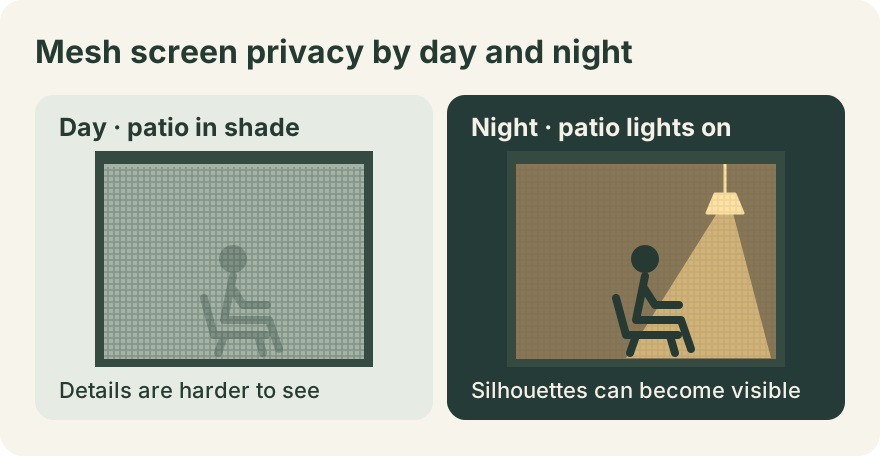
Yes, depending on the weave, the brightness on each side, and the viewing angle. During the day, a bright exterior and a shaded patio can make the view into the patio harder to see. At night, lights behind the screen can reveal people or furniture. A tighter mesh may reduce detail, while a compatible opaque fabric blocks views through the fabric itself. Check any perimeter gaps and neighboring openings if the goal is evening privacy.
Run a daylight and evening sample test
- Compare light and dark fabrics at the same openness, then compare different openness levels in a similar color.
- Hold each sample in the proposed opening at the time of day glare is strongest. Look out from your usual seat, then check from the path or other public sightline.
- Repeat after dark with your usual lights on. Have someone sit behind the sample and check whether you can see movement, silhouettes or details.
- For the final selection, ask for the exact fabric code and the system’s operating limits for that fabric, opening size and mounting arrangement.
Further reading
For the questions buyers ask, see the Reddit discussion about light and dark pergola screens and the discussion about motorized patio shades. Fabric manufacturer Phifer explains how openness, fabric color and lighting affect views in its guide to shade fabrics and privacy.
Plan your project
Review outdoor motorized ZIP screens, then send the width, height and a photo of each opening. Tell us whether glare, the view out, or evening privacy is your priority so we can discuss suitable fabric options.